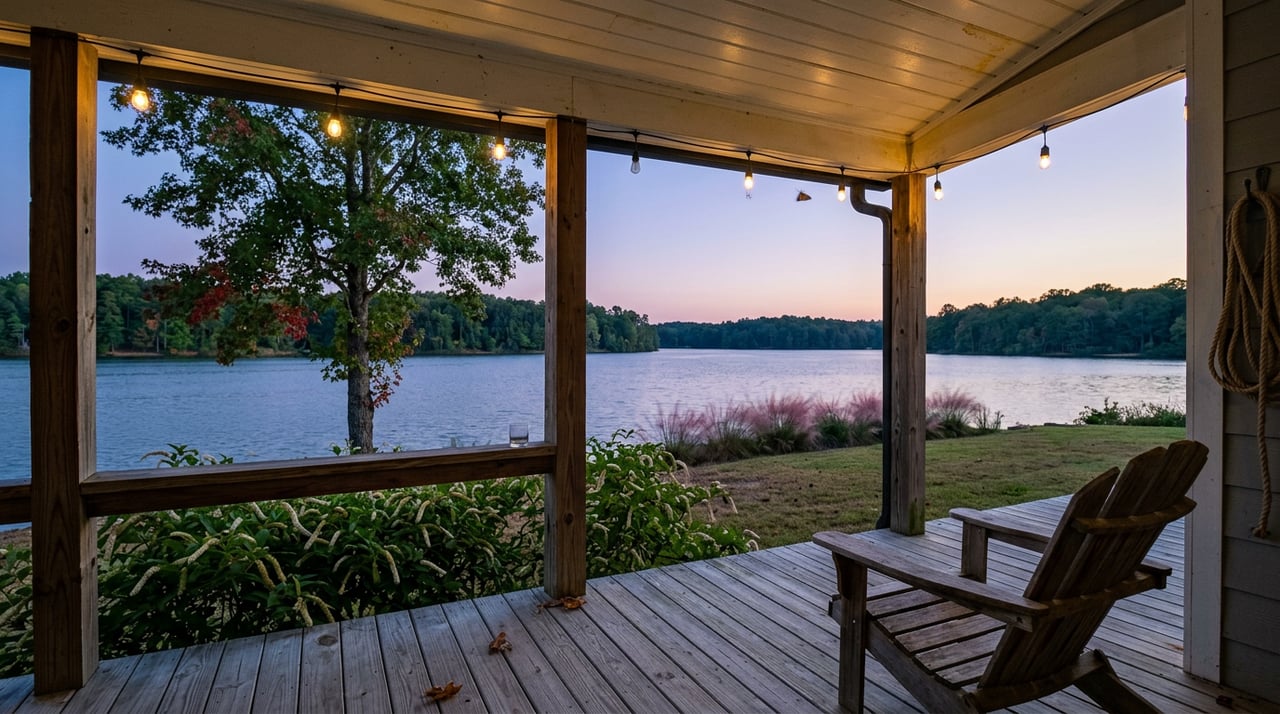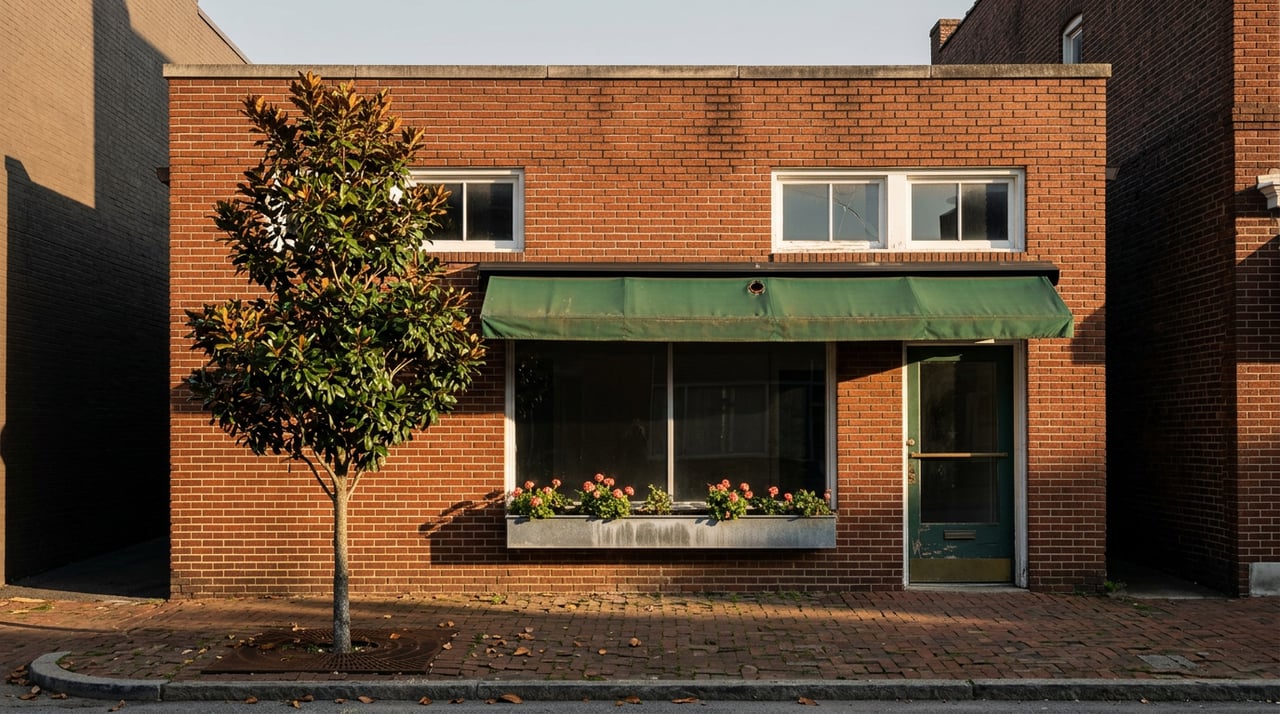
This spring, the Johnson Center for the Arts put up a show called "Alabama The Beautiful," built to mark the country's 250th anniversary. Executive director Andrea Pack framed it around a simple prompt: show the landscapes, memories, and everyday moments that shape a sense of home. Front porch sunsets. Winding country roads. The kind of scenes that don't photograph as tourism but read true to anyone who has actually lived here. The center runs on rotating exhibits, so what's on the walls by the time you read this may have changed, but the routine hasn't: admission stays free, and the Johnson Center keeps weekday hours, Monday through Friday, 10 a.m. to 5 p.m.
That building alone is worth knowing the history of, because the version of downtown Troy that treats a gallery visit as a normal Tuesday errand is younger than most people assume. The square has always had food. The arts identity got built on top of it, on purpose, inside a fairly specific twenty-year window.
The Post Office Almost Didn't Make It
The Johnson Center sits in a classical-revival post office building that went up around 1910. It served as a working government building until 1980, then sat empty for two decades. By 2000, the city was close to tearing it down. A group of local citizens, working with the Pike County Chamber of Commerce, raised enough money through a fundraiser to buy the structure outright and stop the demolition. The Troy-Pike Cultural Arts Center Board of Directors formed that April to figure out what to do with it.
What happened next took most of a decade. The organization first set up shop in a warehouse across the street, using it as a temporary gallery while the post office got restored. In 2005, Troy natives Manley and Mary Johnson gave $500,000 toward that restoration, which is why the center now carries their parents' names, Holman and Ethel Johnson. The renovated post office didn't open as the Johnson Center for the Arts until 2008. The old warehouse became a studio space, and the city bought it back in 2019 to keep it running as one.
So the building people now think of as a fixture of the square, the one with seven galleries and a two-story main gallery running 1,400 square feet, has only existed in its current form since 2008. That is documented in detail by the Encyclopedia of Alabama, and it matters because of what was already sitting a few blocks away when the restoration finally wrapped.
The Food Was Already There
Half Shell Oyster Bar & Grill moved into its current spot on November 1, 1996. The place has a habit locals talk about even now: for years, customers stapled dollar bills to the walls, a tradition that eventually raised enough to donate to St. Jude Children's Research Hospital and Children's Hospital of Birmingham. That's twelve years before the Johnson Center reopened as a gallery.
Sisters Restaurant opened in 1997, started by Pat Rogers and Geraldine Golden, known simply around town as "The Sisters." Their fried chicken and banana pudding built a following before the post office restoration had even started.
Right on the square itself, two newer spots fill out the picture:
- The Corner, at 64 East Court Square, serves loaded mac and cheese and Wagyu beef sliders alongside a full bar.
- B. Graves Restaurant & Bar, a few doors down, sits close enough to Troy University and the Pike County Courthouse that graduation dinners and Friday football crowds are part of its regular rhythm.
None of that food scene waited on an arts board to organize itself. It was already running. What changed is that a gallery finally opened close enough to make an afternoon out of both.
Two Saturdays Every Local Already Circles
The same layering shows up in how the county's biggest art event got to the square in the first place.
TroyFest didn't start downtown. After local artist Jean Lake died in 1976, friends approached the Troy Council on the Arts and Humanities to combine the area's smaller art shows into one event, held on the grounds of the Pike Pioneer Museum. The first Jean Lake Memorial Art Show ran there in 1982, staying on museum grounds for the next two decades.
In 2003, the festival committee moved the show off the museum grounds and onto the downtown square, dropped the entry fee for the first time, and renamed it TroyFest. That single move is what turned the square into a spot people associate with art in the first place, five years before the Johnson Center even reopened its doors. TroyFest now draws upward of 10,000 people over a single weekend. This year's dates were April 25 and 26, held on the downtown square at 131 Elm Street, with Saturday hours running 9 a.m. to 5 p.m. and Sunday 10 a.m. to 4 p.m.
The second fixed point on the county calendar belongs to Brundidge, elsewhere in Pike County. The Annual Peanut Butter Festival has run for more than 25 years, always on the last Saturday in October, and it leans hard into what makes Brundidge Brundidge: a Johnston Mill Peanut Butter Museum, a full day of handmade crafts, produce, and live music on a main stage, all free to attend. Plan far enough ahead and you can catch Brundidge's We Piddle Around Theater too, which runs its "Come Home, It's Suppertime" production for the first two weeks of November, built from stories told by people who actually lived through the Depression era in that part of the county.
What This Actually Means for a Saturday in Troy
None of this changes what's true most weeks: there's usually something worth twenty minutes on the Johnson Center's walls, and there's dinner within a five-minute walk regardless of which direction you go. But knowing the order things happened changes how you read the square itself. The food didn't follow the art. The art got built to match a food and civic scene that was already there, through a fundraiser, a family donation, and a festival committee's decision to move an event off museum grounds and into the middle of downtown.
That's the difference between a place that feels old because it is, and a place that feels old because someone worked, over about two decades, to make it feel that way on purpose. Troy's square is the second kind. It's worth knowing which one you're standing on.
If you're the kind of person who ends up thinking about property while you're out walking a downtown square, whether that's a house near the college or acreage further out toward Brundidge, Sunbelt Poultry keeps current listings across Pike County and the surrounding area. Browse Poultry Farms when you're ready to look.